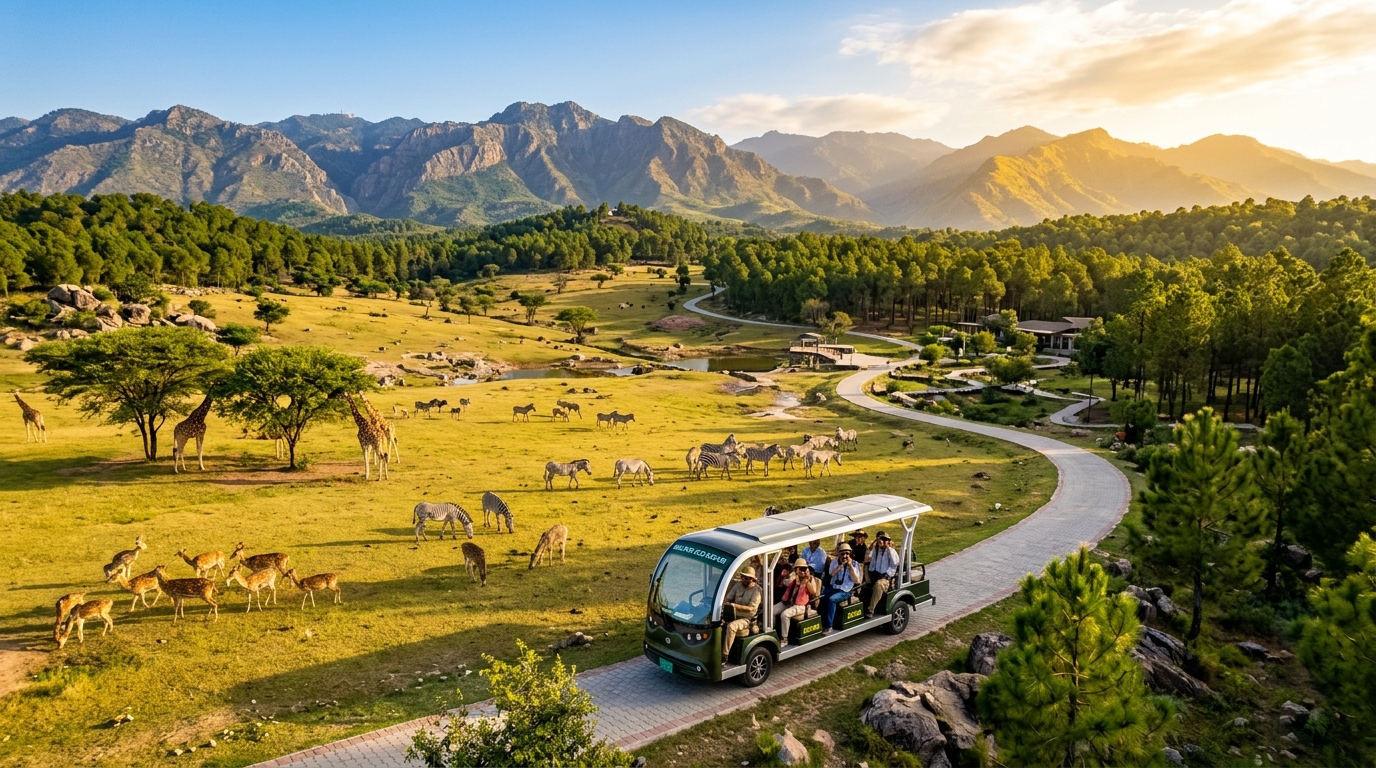
1. Project Overview: A Safari Park Paired With a Skyscraper District
Interior Minister Mohsin Naqvi's SPREX announcement bundled two landmark projects into a single urban transformation vision for Islamabad: the 1,000-acre Manhattan High-Rise District behind PM House, and a 450-acre open-range Safari Park in the Malpur area along Murree Road. Both projects are under Ministry of Interior patronage, both will be developed through the single-window concession model, and both are intended to reposition Islamabad as a global tourism and investment destination.
The Safari Park is not an extension of the existing Islamabad Zoo (located in Sector G-6 on a modest 12-acre footprint). It is an entirely new facility designed on the open-range African safari model — where animals roam vast enclosures and visitors traverse in safari vehicles rather than observing from fixed enclosures.
Key Distinguishing Features vs. Existing Islamabad Zoo
- Scale: 450 acres vs. the existing zoo's 12 acres — a 37.5x increase in size.
- Model: Open-range safari (drive-through wildlife corridors) vs. fixed enclosure zoo model.
- Species: New exotic species will be procured — existing zoo will not be relocated to this site.
- Location: Malpur, Murree Road (outside Margalla Hills reserve boundary) vs. G-6 central Islamabad.
- Revenue Model: International tourism, safari lodges, conservation research center, private concession stands.
2. How Islamabad's 450-Acre Safari Park Ranks in Asia
To substantiate the "Asia's largest" claim, here is a direct area comparison with major operational safari parks and zoological facilities across Asia:
| Park / Facility | Country | Area (Acres) | Model | Status |
|---|---|---|---|---|
| Islamabad Safari Park (Proposed) | 🇵🇰 Pakistan | 450 acres | Open-Range Drive-Through | Planned (2026) |
| Chimelong Safari Park | 🇨🇳 China (Guangzhou) | 370 acres | Open-Range + Rides | Operational |
| Everland Safari World | 🇰🇷 South Korea | 200 acres | Drive-Through Safari | Operational |
| Bangkok Safari World | 🇹🇭 Thailand | 320 acres | Open-Range + Zoo | Operational |
| Singapore Zoo + Night Safari | 🇸🇬 Singapore | 69 acres | Traditional Zoo + Night | Operational |
| Delhi Zoo | 🇮🇳 India | 176 acres | Traditional Zoo | Operational |
Note: Rankings are by total fenced/operational area. China's Chimelong is currently the largest operational open-range park in Asia at ~370 acres; Islamabad's proposed 450-acre facility would surpass it upon completion.
3. Animal Species & Procurement Plan
The government has committed to importing new exotic animal species — a significant departure from Pakistan's previous zoo development pattern of working with existing domestic stock. Procurement will require compliance with CITES (Convention on International Trade in Endangered Species) regulations, bilateral animal sharing agreements, and Ministry of Climate Change clearances.
🦁 African Big Five Zone
Lion (Panthera leo), African Elephant (Loxodonta africana), Leopard (Panthera pardus), White Rhinoceros (Ceratotherium simum), and Cape Buffalo — the cornerstone of the open-range safari experience.
🐯 South Asian Species Zone
Bengal Tiger (Panthera tigris tigris), Snow Leopard (Panthera uncia) native to Pakistan's Karakoram, Markhor (Pakistan's national animal), and Himalayan Brown Bear — indigenous species in a natural habitat corridor.
🦒 Savanna & Plains Zone
Giraffe (Giraffa camelopardalis), Zebra (Equus quagga), Cheetah (Acinonyx jubatus), Wildebeest, and Ostrich — creating an African savanna experience in Islamabad's Margalla piedmont setting.
🦜 Avian Safari Zone
Walk-through aviary with flamingo colonies, pelicans, African crowned cranes, Himalayan Monal (Pakistan's national bird), and eagle/falcon display grounds tied to Pakistan's falconry heritage.
🐊 Reptile & Aquatic Zone
Nile Crocodile, Gharial (Gavialis gangeticus), Nile Hippo enclosure, freshwater aquarium, and Sea Life tunnel — creating a complete wildlife experience beyond the standard safari drive.
🌱 Conservation Research Centre
A dedicated Snow Leopard and Markhor conservation breeding centre in partnership with WWF-Pakistan and the Ministry of Climate Change — adding scientific and international credibility to the facility.
4. Park Design Principles & Infrastructure
The Safari Park will be designed on the master-planned open-range model used at Chimelong (Guangzhou) and Cabarceno (Spain) — a naturalistic, landscape-first approach where terrain contours and indigenous vegetation define enclosure boundaries rather than fences.
🚌 Safari Drive Circuit
A 12–15 km enclosed safari circuit traversable by electric safari buses (capacity 40–60 persons), personal vehicles in designated zones, and optional hot-air balloon safaris over the entire reserve.
🏨 Glamping & Safari Lodges
Eco-lodges and glamping tents positioned at dawn-and-dusk observation points within the park boundary — enabling overnight guests to experience nocturnal wildlife activity without leaving the reserve.
🌿 Riparian Corridors
Seasonal stream channels (nullahs) from the Margalla Hills will be incorporated as natural water features — creating watering holes for large mammals and riparian wildlife habitat within the park design.
🎓 Education & Research Hub
A 10-acre Safari Academy housing a veterinary hospital, wildlife research labs, school education centers, and international conservation conference facilities — designed to attract global wildlife NGOs.
5. Tourism Revenue & Economic Impact Projections
The economic case for pairing a 450-acre safari park with the 1,000-acre skyscraper district is deliberate. Hotel guests in the Manhattan District's planned 5-star and 7-star towers will have a world-class safari experience within a 10-minute drive — a combination not found anywhere else in South Asia.
| Revenue Stream | Benchmark Reference | Projected Annual (Year 3+) |
|---|---|---|
| Safari Admission Tickets | Chimelong: $35–80/person | PKR 2.5–4.0 Billion |
| Safari Lodge & Glamping | African lodges: $150–400/night | PKR 800M–1.2 Billion |
| Corporate Events & MICE | Singapore Zoo MICE rates | PKR 300–500 Million |
| Conservation Research Grants | WWF / IUCN funding models | PKR 100–200 Million |
| Foreign Tourist Spend | Estimated 300K visits/yr (Year 3) | PKR 4–6 Billion (indirect) |
6. Legal Status & Environmental Considerations
The Safari Park development has attracted scrutiny from environmental groups and legal observers regarding its relationship to Islamabad's protected Zone-3 forest boundary. Here is the current legal position:
Key Legal Questions Under Review
- Zone-3 Boundary: Government lawyers argue the Malpur site falls outside the notified Zone-3 Margalla Hills protected forest boundary. Environmental groups have contested this with their own survey data.
- EIA Requirement: A full Environmental Impact Assessment (EIA) under the PEPA 1997 (Pakistan Environmental Protection Act) is mandatory before any ground-breaking. The Ministry of Climate Change must issue a No Objection Certificate.
- Supreme Court Suo Motu: The Supreme Court has historically taken suo motu notice of Margalla Hills deforestation. Any Safari Park construction must be demonstrably outside the court-protected forest perimeter to proceed without judicial challenge.
- CITES Compliance: All animal imports require CITES export permits from source countries and CITES import permits from the Ministry of Climate Change — a multi-year process for endangered species.